Deadly Meteor Hits Russia Shocks World

By on Feb 15, 2013 in Breaking News | 0 comments

  Deadly Meteor Hits Russia Injures 750+ People   Wow what a day! While everyone’s eyes were on 2012DA14 this surprise meteor comes out of nowhere over Russia. Not only that but there are tons of photos and footage on this! Sadly there have been at least 750 people reported injured. I first heard news from my main guy Phil Plait over at Bad Astronomy and the story goes that at 9:30 a.m a meteor broke over Russia or 1500 km east of Moscow. It was in broad daylight and was even brighter than the sun! There was a sonic boom from the explosion which blew out most of the windows. This event shocks us in a way that no one had expected. The whole world was watching Russia and wondering what it looked like. Here is some of the Russian citizens saw.               More on this:http://chelyabinsk.ru/text/news/621775.html...

How Asteroid 2012DA14 Could Potentially Wipe Out a Major City

By on Feb 15, 2013 in Breaking News | 0 comments

credit: NASA 2012DA14 Killer Asteroid or Just Passing Neighbor?   You may have already heard something about an asteroid passing by Earth today. Even more so, the closest predicted fly by on record. Well one question a lot of people have asked is if this asteroid will come swoop down and hit us. Well let’s take a closer look at the details of this asteroid. First off the size of the asteroid is about 50m (160 ft) which doesn’t sound like a whole lot because whenever a meteor or asteroid enters our atmosphere it burns up on entry. Furthermore, the burn up causes the size to diminish or even break up into even smaller meteors and give nothing more than a great display. However that’s not the full story. 50m asteroids are no joking matter at all. In fact if this asteroid did come down and hit Earth it could easily wipe out a major city like Atlanta or Chicago. You...

Coolest Animation of a Variable Red Star in Action (V838 Monocerotis)

By on Jan 29, 2013 in Pictures | 0 comments

V838 Monocerotis is located 20,000 light years away in the constellation Monoceros. It’s one of the most interesting red variable stars (variable star is a star whose brightness fluctuates as seen from Earth) because at first astronomers thought this was a classic case of a nova but in fact it’s something completely different and to make matters even juicier, they aren’t even sure why! This red star is 5-10 times the mass of our own Sun and has been seen rapidly heating up and expanding in matter of months! This is rarely seen with stars and is telling about how fast this is all happening.   Source: http://observatory.open.ac.uk/data_store/fun_stuff/v838_monocerotis.html Make sure to check out the smoother animation in the source link! It’s even better!

What are Blazars?

By on Jan 21, 2013 in For Your Information | 1 comment

  For most people they have only heard of cool space terms like black holes, supernovas or maybe even quasars. Well blazar isn’t a common term you’ll hear a lot and it’s actually not very different from a quasar. The picture above is essentially a blazar. It has an intensely bright central nucleus (or part of a classification called “active galactic nuclei” or AGN) containing a supermassive black hole. What’s really crazy about blazars is that the emitted light which sometimes includes extremely high energy gamma rays, can be over a hundred million times more energetic than the highest energy X-rays that the Chandra X-ray Observatory can study. Now just imagine a swirling disk filled with massive amounts of energy. We are talking about high energy gamma rays shooting out at 99% the speed of light! Also to make you feel even more uneasy, blazars...

Parting Moon Shots from GRAIL Mission

By on Jan 11, 2013 in Video | 0 comments

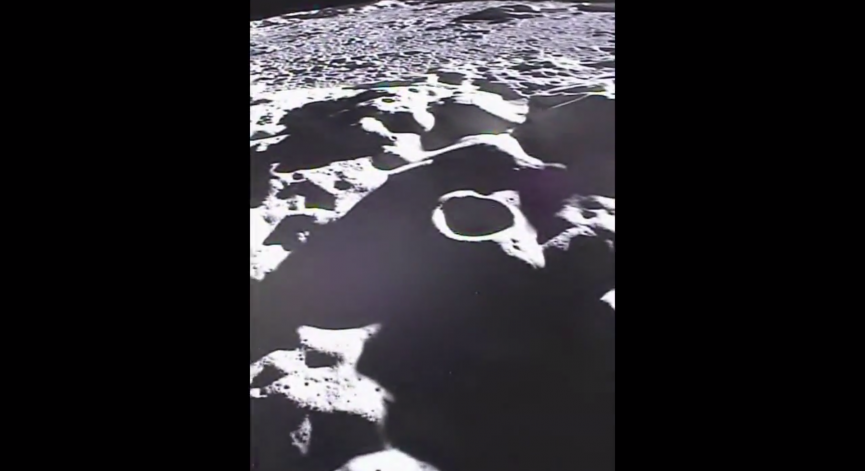
Parting Moon Shots from GRAIL Mission

Mind Blowing Neutron Star’s Spin

By on Jan 8, 2013 in Video | 0 comments

  This movie from NASA’s Chandra X-ray Observatory shows a fast moving jet of particles produced by a rapidly rotating neutron star, and may provide new insight into the nature of some of the densest matter in the universe. The star of this movie is the Vela pulsar, a neutron star that was formed when a massive star collapsed. The Vela pulsar is about 1,000 light years from Earth, spansis about 12 miles in diameter, and makes over 11 complete rotations every second, faster than a helicopter rotor. (NASA) This is an incredible video of a neutron star’s spin and is a reminder to how insane nature can be.

Just Watch This. A Flight Through the Universe

By on Jan 7, 2013 in Video | 0 comments

Watching this makes you feel like a spiritual being travelling through the cosmos. Amazing how even a galaxy as big as our own can just be a point of light in the sky.  

New Clues for the History of Water on Mars

By on Jan 5, 2013 in Breaking News | 0 comments

Recently news broke out when a martian meteorite (founded in the Moroccan dessert in 2011) revealed information about water on Mars. Professor Agee (lead scientist on this research paper) is arguing that this meteorite, nicknamed “Black Beauty”, is a very special rock because it has characteristics of a basaltic breccia rock (or a rock that has fragments of other rocks combined together by a volcano) and that there is 10 times amount of water bounded to the rock than what is normally found in other Martian rocks. This meteorite has also been classified to date back to 2 billion years old which gives us an idea of when there could have been water. However, how do we know this rock truly indicates these findings? Well other martian rocks found back in 2005 have shown how they can be chemically altered by liquid water. Black Beauty matches those findings as well.  This is the...